Lunar death and rebirth
The Glass Bead GameLunar death and rebirth is the cycle of disappearance, return, and renewed life that shapes the Rainmaker’s traditional understanding of the moon and becomes a defining element of Joseph Knecht’s apprenticeship. It joins practical knowledge of seasons and nature to beliefs about the dead, future generations, and mortality. For Knecht, studying the moon opens an early sense that human lives and natural processes belong to one connected order.
Cosmology and Practical Knowledge
The Rainmaker’s teaching presents the moon as more than a body used to measure time. Its changing phases and effects are the basis of his inherited knowledge, and the moon is understood as peopled by the souls of the dead. Those souls are sent forth into new births, making lunar change part of a cycle that links death with the arrival of new life.
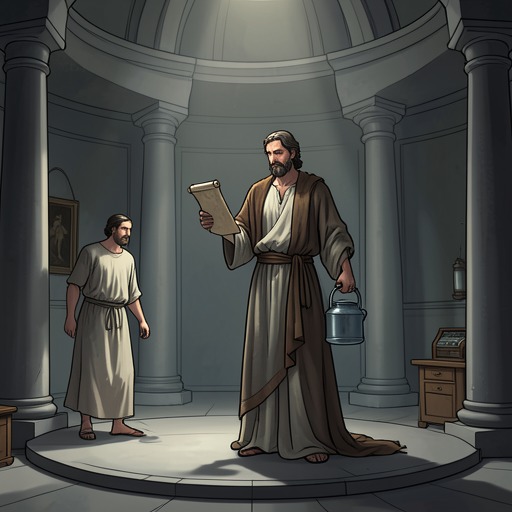
This cosmology has direct consequences for village life. The Rainmaker determines the proper time for sowing by considering the moon, drawing both on inherited rules and on his own experience. The ceremonial first sowing, however, belongs to the tribal mother or her oldest female relative, rather than to the Rainmaker. His knowledge is thus important to the agricultural calendar, while the authority to open the sowing season remains with the women who hold that communal office.
The moon’s cycles also inform the Rainmaker’s response to calamity. In drought or persistent bad weather, he undertakes sacrifices, exorcisms, processions, and other community rites; tradition holds that when all remedies fail, the Weathermaker himself may be sacrificed. The lunar cycle does not guarantee control over nature. It supplies a framework for interpreting change, carrying out seasonal duties, and confronting the possibility that even the specialist’s efforts may fail.
The Lesson on the Rock
Lunar death and rebirth first takes decisive personal form for Knecht during a night lesson with Turu. The old Rainmaker wakes him two hours after midnight and brings him into the hills to watch the last rising of a waning crescent moon. The moon appears in the position and shape Turu has predicted. He explains that it will wax again, and that the time to sow buckwheat will then arrive.
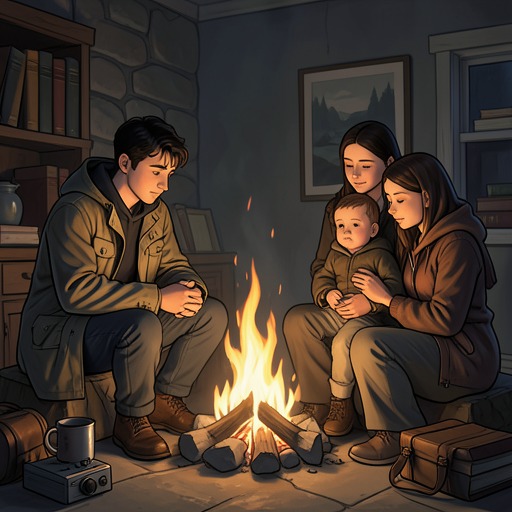
Turu links this natural recurrence to his own death and the future of Knecht’s family. He tells Knecht that, when he dies, his spirit will fly into the moon; that Knecht will later marry Turu’s daughter Ada; and that the spirit will return from the moon in their son, who is to be named Turu. The statement makes the cycle intimate and prospective: the teacher imagines his own return not as an abstraction, but as a future child within Knecht’s household.
Knecht receives the prediction in astonishment. He sees the predicted crescent in the sky and begins to sense connections among the moon, Turu, Ada, his own future, birth, and death. The experience gives him a first intimation of an ordered whole in which human lives and natural events are related, and he understands himself as included within that order rather than standing outside it. The moment stays with him throughout his life, not as a formal doctrine he can readily explain, but as a persistent inner reminder that the world’s parts concern one another and that a person has a share in the responsibility of knowing it.
Inheritance and Transformation
As Turu’s apprentice, Knecht learns primarily through the senses and through practical experience, rather than through written methods or abstract instruction. The lunar cycle belongs to this embodied inheritance: the student must learn to observe the moon’s phases and effects, test what he has been taught, and relate celestial signs to weather and the growth of plants. The knowledge is at once an occupation, a tradition, and a way of apprehending connections among natural processes.
Knecht’s later life follows the succession Turu foretold. He marries Ada, becomes the Rainmaker’s assistant, and eventually takes over the work. Their son is named Turu, in keeping with the old Rainmaker’s prediction that his spirit would return through the moon in a child. The story thus turns lunar rebirth into a pattern of inheritance: the teacher’s identity and office pass to Knecht, while the name Turu marks a further generation.
Knecht’s sustained study of the moon eventually carries him beyond his teacher’s knowledge. Its waxing and waning remain closely bound to his understanding of the seasons and weather, but also acquire a personal spiritual significance. He experiences the moon’s disappearance and return as a mystery within himself, and treats its apparent vulnerability during an eclipse as a moment of shared danger. The cycle gives him an image through which to feel both change and continuity.
Mortality, Sacrifice, and Renewal
Knecht’s relationship to lunar recurrence changes his attitude toward death. As his knowledge and devotion deepen, he becomes less subject to the fear of dying that dominates ordinary life. The moon’s disappearance and return strengthen his faith in a second coming and in the possibility of renewal after apparent extinction. His confidence does not mean that he is untouched by fear: he shares the community’s anxiety during an eclipse, but remembers comparable events and trusts more firmly in the cycle’s return.
That outlook is tested during a severe agricultural crisis. After repeated crop failures and a prolonged drought, the village’s rites do not bring rain, and some villagers demand that Knecht be sacrificed according to the old custom. Knecht accepts the prospect of death and tells his son Turu to assume the Rainmaker’s office if the sacrifice occurs. He then presents Turu as his successor to the tribal mother and offers himself in accordance with the community’s tradition. The crisis places the renewal associated with the moon beside a real and perilous question of succession: the old Rainmaker’s life may end, while the next one must be prepared to carry on his work.
The story’s other uses of death and return clarify the distinctiveness of this lunar teaching without making its beliefs identical to other traditions. In Knecht’s official “Lives,” students imagine themselves in different historical settings, an exercise that preserves a playful, non-dogmatic version of the ancient doctrine of reincarnation. In another of these imagined lives, Father Jacobus considers how Christian faith confronts suffering and death, while the Indian tale has the yogi call Dasa’s worldly experience “Maya!” These parallels place lunar renewal within the book’s wider interest in changing forms of spiritual understanding, but Turu’s teaching remains rooted in the moon’s visible phases, the village’s seasonal duties, and the return of a name and role across generations.
Lunar death and rebirth therefore joins observation to belief, agricultural practice to family inheritance, and the prospect of death to the hope of recurrence. Its importance for Knecht lies not in a detached theory about the afterlife, but in the early conviction that the moon, the seasons, the dead, and the living belong to a connected order—and that recognizing such connections is itself a way of entering into that order.